For ten years, from 1987 to 1997, Sutherland Presses manufactured and sold center drive mechanical presses. The company gained extensive real-world experience with the architecture across demanding production environments. That experience ultimately led to a major engineering decision: stop building center drive systems entirely. According to Sutherland, the long-term maintenance and reliability challenges associated with center drive configurations outweighed their advantages, especially in high-production applications where uptime and serviceability directly affect profitability.
One of the primary issues identified by Sutherland was the service complexity created when drive couplings lose timing. In a center drive press, the gears are positioned deep in the center of the crown structure, making access difficult for maintenance technicians. Over time, this can transform a routine repair into a major rebuild project.
Key concerns included:
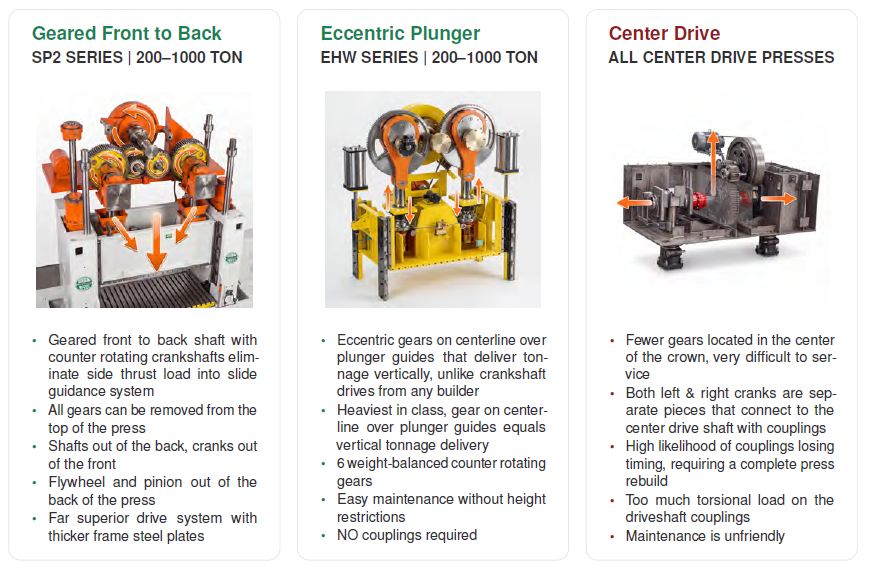
Sutherland states that torsional loading on driveshaft couplings became a recurring reliability issue in center drive systems. Over years of production cycles, these stresses can accelerate wear and increase the likelihood of timing failures. According to the company, the problem is not simply a short-term maintenance concern but a long-term ownership issue that affects the total lifecycle cost of the press. The company emphasizes that maintenance teams often inherit the consequences of engineering decisions made years earlier during equipment specification.
After moving away from center drive systems, Sutherland standardized its mechanical press offerings around two specific drive architectures. The company states that these systems were selected specifically for reliability, accessibility, structural stability, and long-term serviceability.
Today, Sutherland focuses on:

The SP Series mechanical presses, ranging from 200 to 1,600 tons, utilize a geared front-to-back drive architecture. Sutherland explains that the design uses counter-rotating crankshafts to eliminate side thrust loads entering the slide guidance system. The company also highlights maintenance accessibility as a major advantage. Gears can be removed from the top of the machine, while shafts, flywheel components, and pinions can be serviced from the back. According to Sutherland, the heavier frame steel construction throughout the press contributes to increased rigidity and long-term durability under demanding forming conditions.
For larger straight-side applications, Sutherland developed the EHW Series, available from 300 to 2,500 tons. This platform uses an eccentric plunger-guided configuration designed to deliver tonnage vertically through the centerline directly over the plunger guides. Unlike center drive systems, the EHW architecture eliminates couplings entirely, reducing several potential failure points associated with torsional loading and timing issues. The company states that the design also minimizes side thrust into the gibbing system while maintaining high structural stability during heavy forming operations.
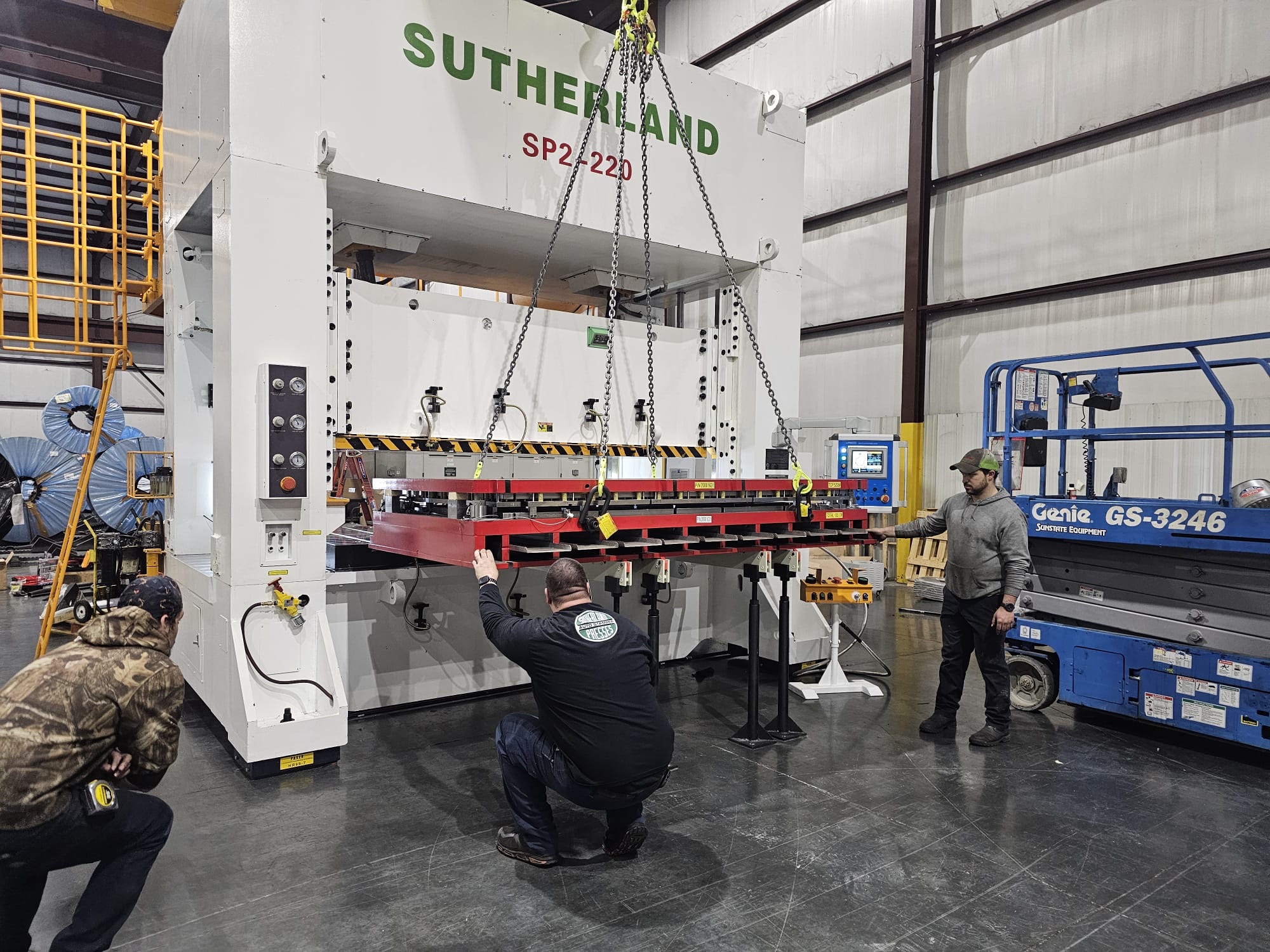
Sutherland emphasizes that serviceability was intentionally engineered into both the SP and EHW product lines. The company believes maintenance accessibility should be considered as important as tonnage capacity or production speed during press selection.
According to Sutherland, both platforms were designed with:
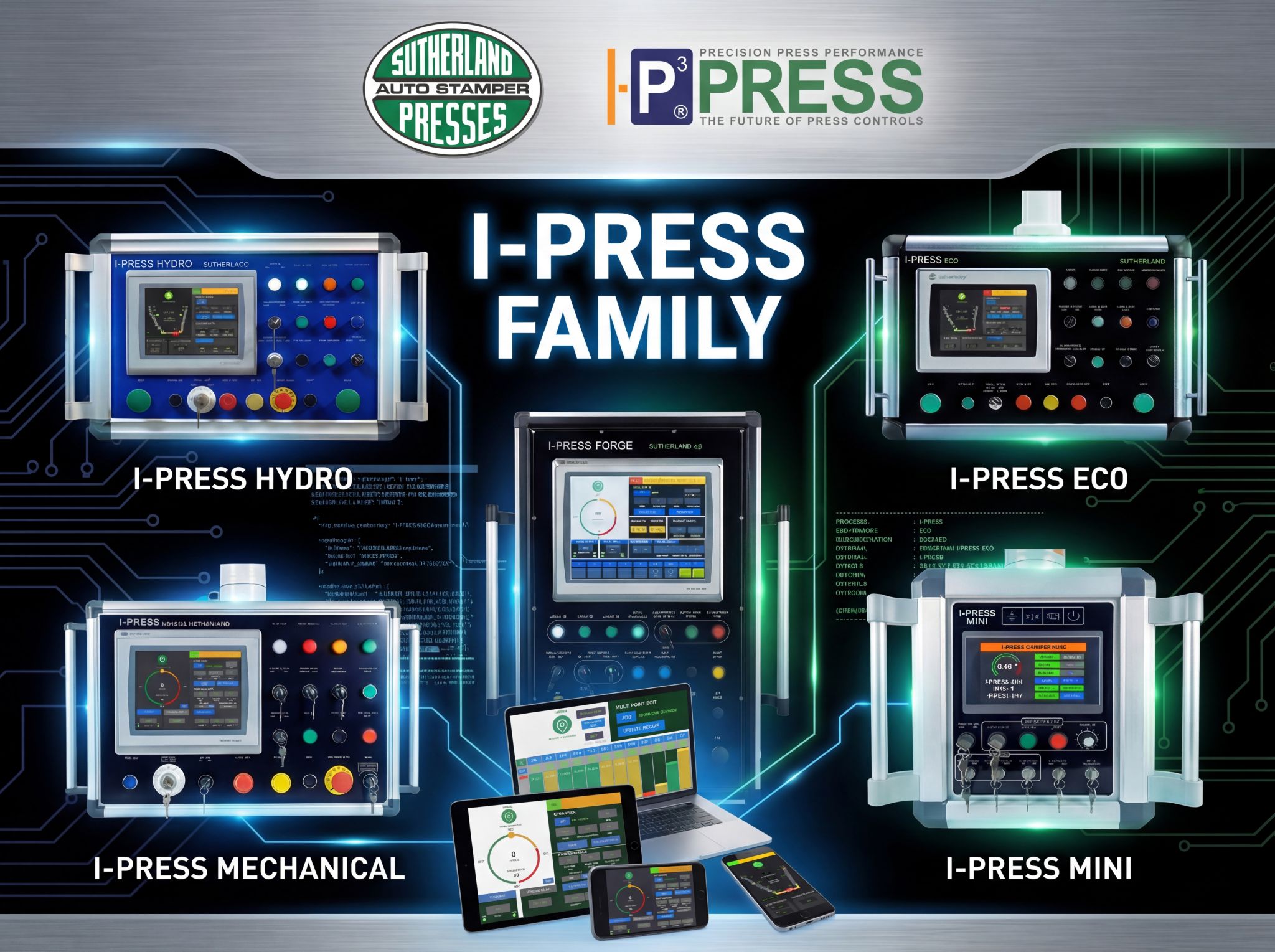
Both the SP and EHW Series are built to exceed JIS-1 accuracy standards and are equipped with the company’s I-PRESS MECHANICAL control platform. Standard features include programmable cams, die protection systems, job memory functionality, full machine diagnostics, and Industry 4.0 connectivity capabilities. Sutherland states that these systems are currently operating across automotive, aerospace, appliance, electrical, and heavy industrial manufacturing facilities worldwide. The company’s full mechanical press line ranges from 35-ton gap frame presses to 3,500-ton four-point straight-side systems.
Sutherland Presses says its decision to move away from center drive presses was shaped entirely by real production experience and long-term customer support exposure. The company argues that the drive architecture of a mechanical press has a greater impact on reliability and maintenance costs than the brand name displayed on the machine itself. By narrowing its focus to two drive systems engineered around serviceability and durability, Sutherland believes it has created platforms better suited for long-term industrial production environments.
📞 Reach out to Team Sutherland to learn more:
Email: Info@SutherlandPresses.com
Phone: +1-310-453-6981


For ten years, from 1987 to 1997, Sutherland Presses manufactured and sold center drive mechanical presses. The company gained extensive real-world experience with the architecture across demanding production environments. That experience ultimately led to a major engineering decision: stop building center drive systems entirely. According to Sutherland, the long-term maintenance and reliability challenges associated with center drive configurations outweighed their advantages, especially in high-production applications where uptime and serviceability directly affect profitability.
One of the primary issues identified by Sutherland was the service complexity created when drive couplings lose timing. In a center drive press, the gears are positioned deep in the center of the crown structure, making access difficult for maintenance technicians. Over time, this can transform a routine repair into a major rebuild project.
Key concerns included:


